
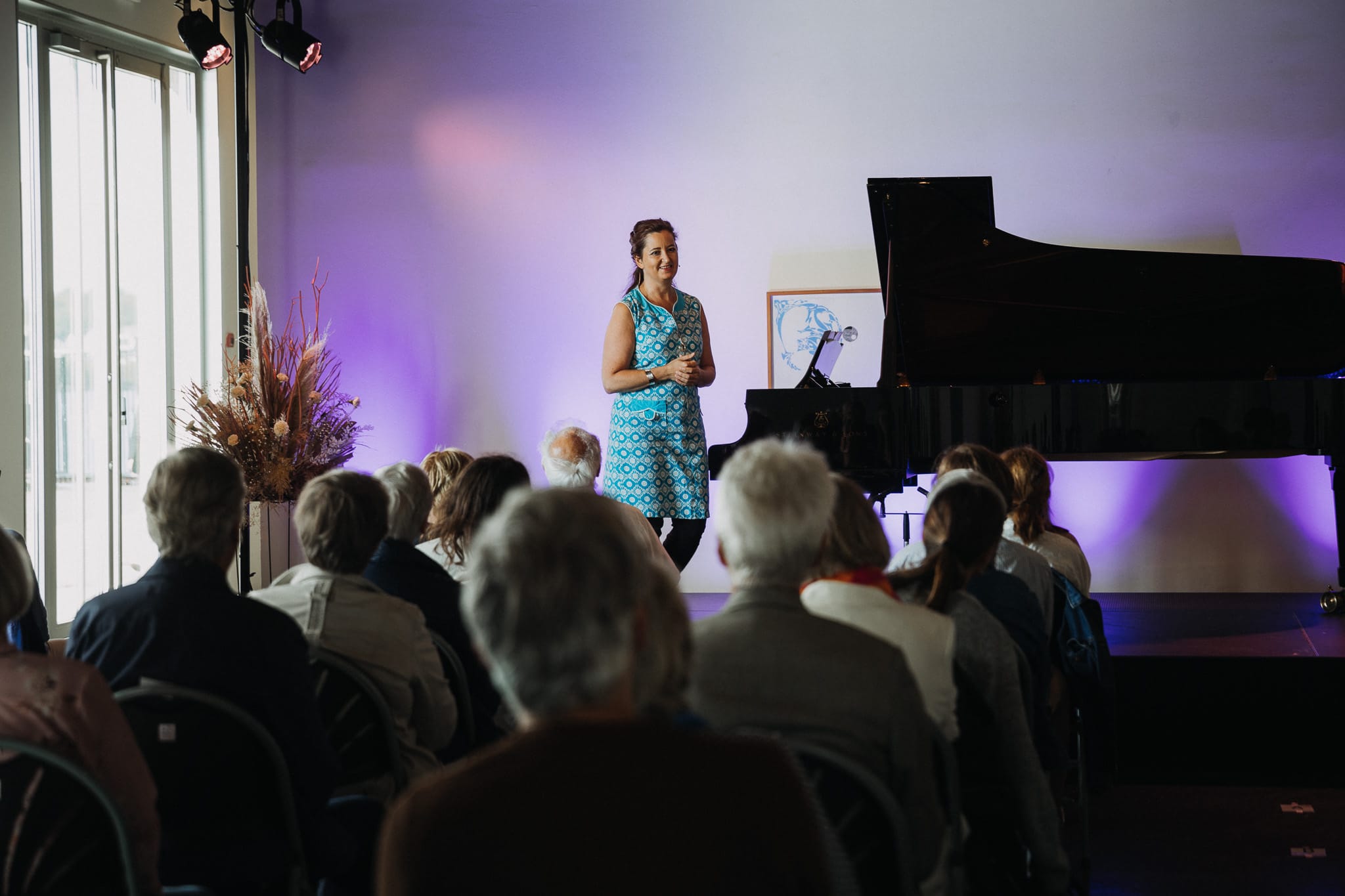
I live with Parkinson’s disease. This means that every day, my body reminds me that nothing can be taken for granted anymore. At the same time, the disease has made me more aware that the body is not just a means of transport, but a place where we live, understand and experience the world. Music has become a space where I can breathe more freely, listen more deeply and feel more whole.
Becoming one with the music
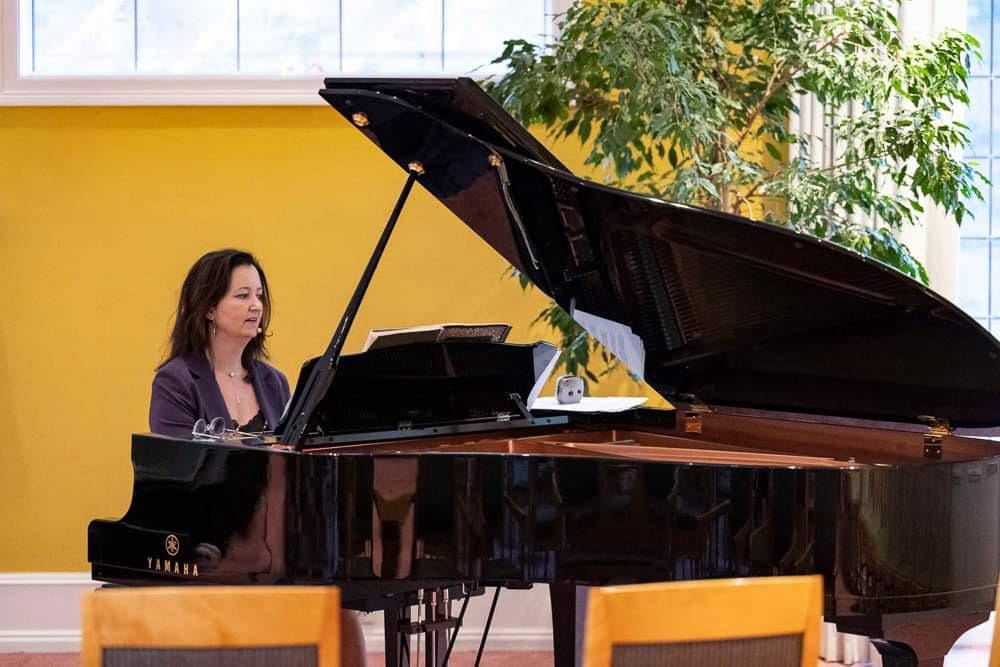
When I established Lyttelos in 2018, it was with a desire to help other people discover the gift we are blessed with here in our time on earth: classical music. Musical works that are much greater than us mere mortals. Music that is created outside of time and space, and which lives on through century after century. When I play a concert, my goal is to forget myself, free myself from my own ego and become one with the music I play. That’s why I always felt a little frustrated when the comments afterwards focused on my performance: ‘You’re so talented.’ Gradually, I realised that many people don’t know what to say. They lack the vocabulary to talk about the musical experience, and resort to saying whether they liked it or not. With Lyttelos, I developed this to a certain extent, but when I got to know Piotr, who knows so much about Buddhist philosophy and practice, a new concept developed where the audience also listens inwardly.
The listening body—a new listening landscape
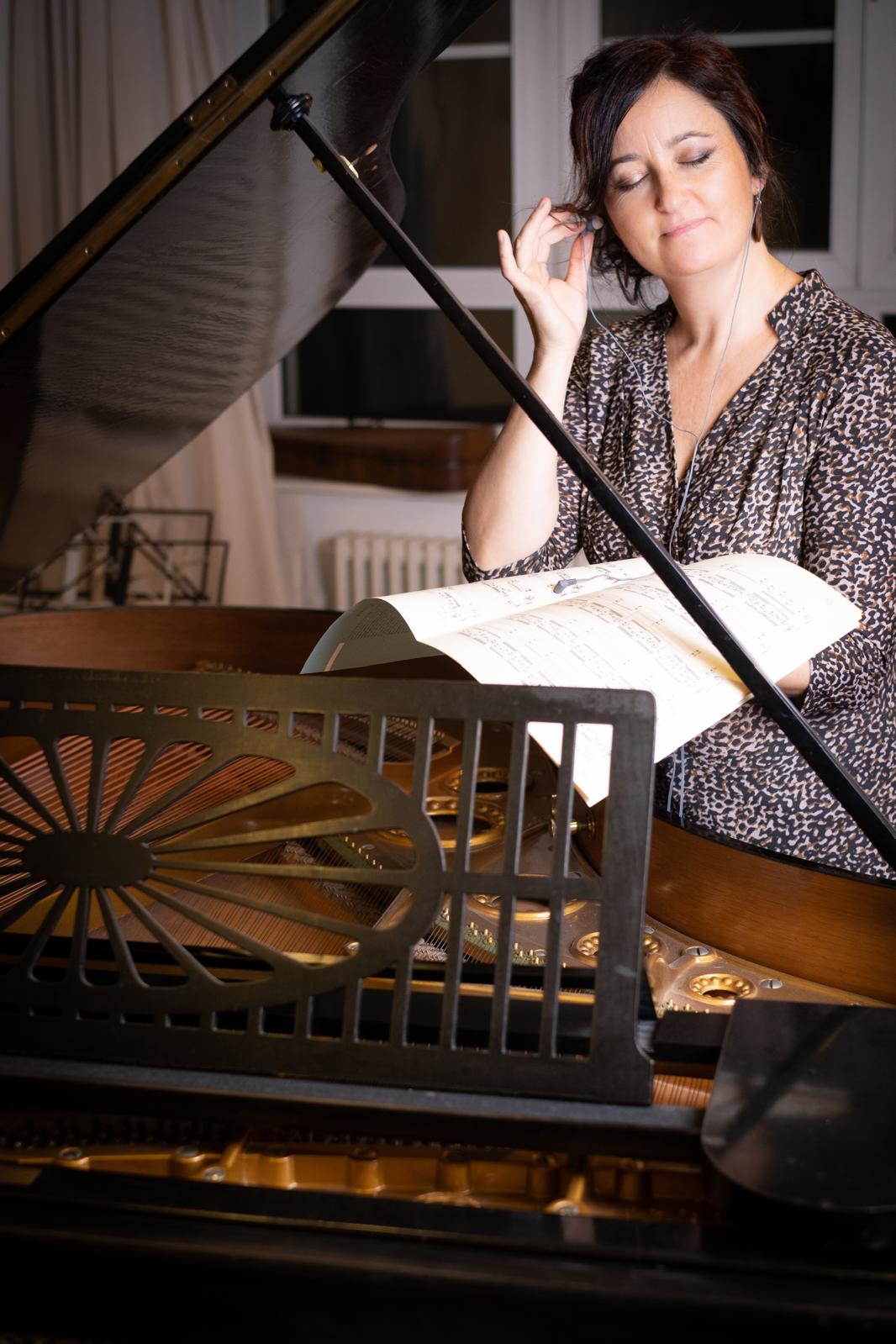
The first task the participants are given is to turn their attention inward. ‘What is going on inside you when you listen to this music?’ I like to give a few small hints: ‘Notice your breathing, your heartbeat, what is going on in your feet, do you feel like moving?’ The head and mind are also involved: ‘Do images, colours, thoughts or memories come to mind?’ One is generous and welcomes everything without judgement.
When we open up for feedback after the music has been played, I am deeply moved by people’s responses. But also by the genuine, transparent expression on their faces. As if someone has pulled away a veil. Physical experiences—tingling in the head, back pain that disappeared, the feeling of a large, open space in the chest. Memories flooding back. A young girl who felt the loss of her deceased father. A lovely, white-haired lady of 88 who remembered how she had played this piano piece as a young woman. Her cheeks glowed and her eyes sparkled as she recounted how the music brought her back to those happy days of her youth.
When the body understands before language
It is precisely these kinds of experiences that recent research is trying to understand through the perspective of embodied cognition. Here, the experience of music is not seen as something that primarily takes place in the head, but as a holistic process in which the body, senses, emotions, memories and movement are inextricably interwoven. The body listens, responds and creates meaning, often before language comes into play. In music, this means that pulse, breath, muscle tension and internal movement are active parts of how we experience and understand sound. Music sets something in motion within us—not only emotionally, but physically. It moves us, literally, even when we are sitting completely still.
Being guided through the music
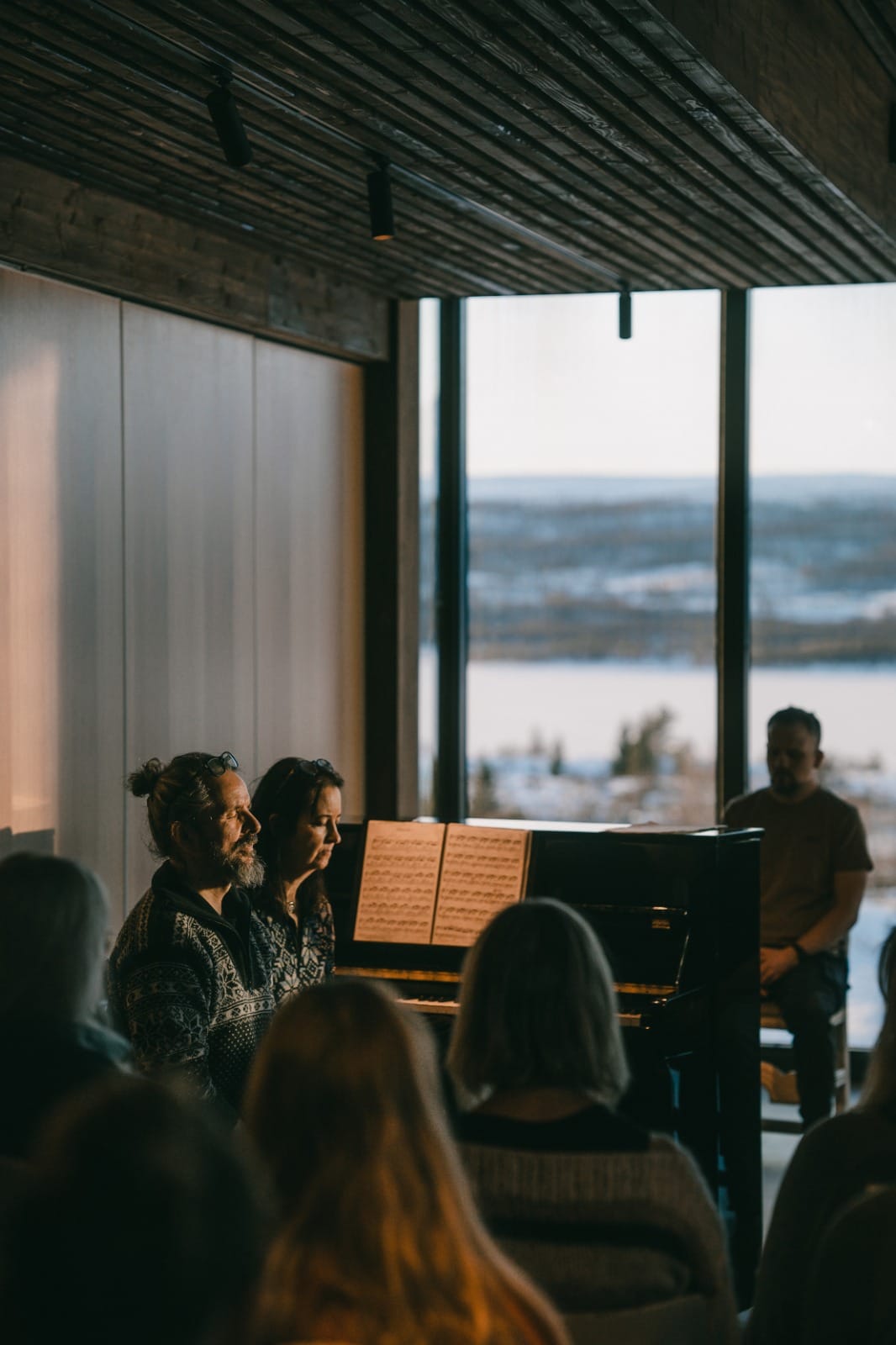
In the second part of the concert, I become Lyttelos. I take the audience on a kind of guided tour inside the music. We listen to both the parts and the whole—to details, transitions and connections. I invite them to notice how the music builds tension, releases it, and how we are constantly caught between what has just been and what is about to come.
This way of listening is phenomenological, and my teacher in this approach for over 30 years has been Jordi (JORDI MORA). Music is not understood as an object outside ourselves, but as an experience that arises in the encounter between sound and human beings. The past, present and future are simultaneously present in listening: in the memory of what has been, in the expectation of what is to come, and in the intense presence of the moment. In this way, listening to music becomes an active, creative act, where meaning emerges as the music moves through us.
Resting in the moment
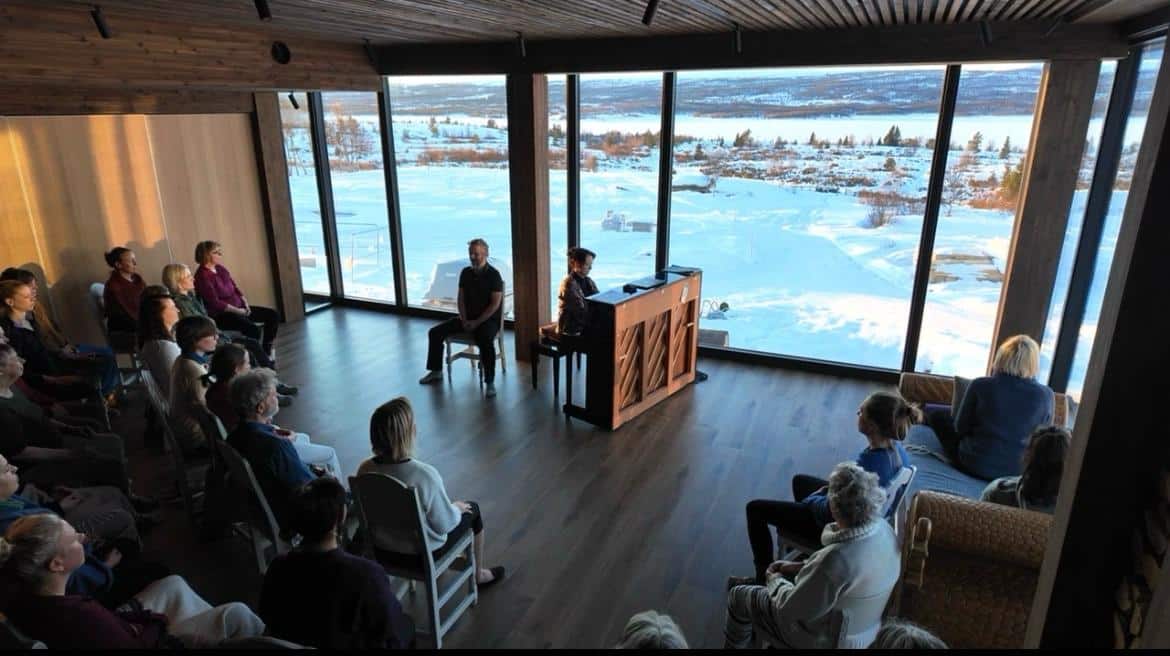
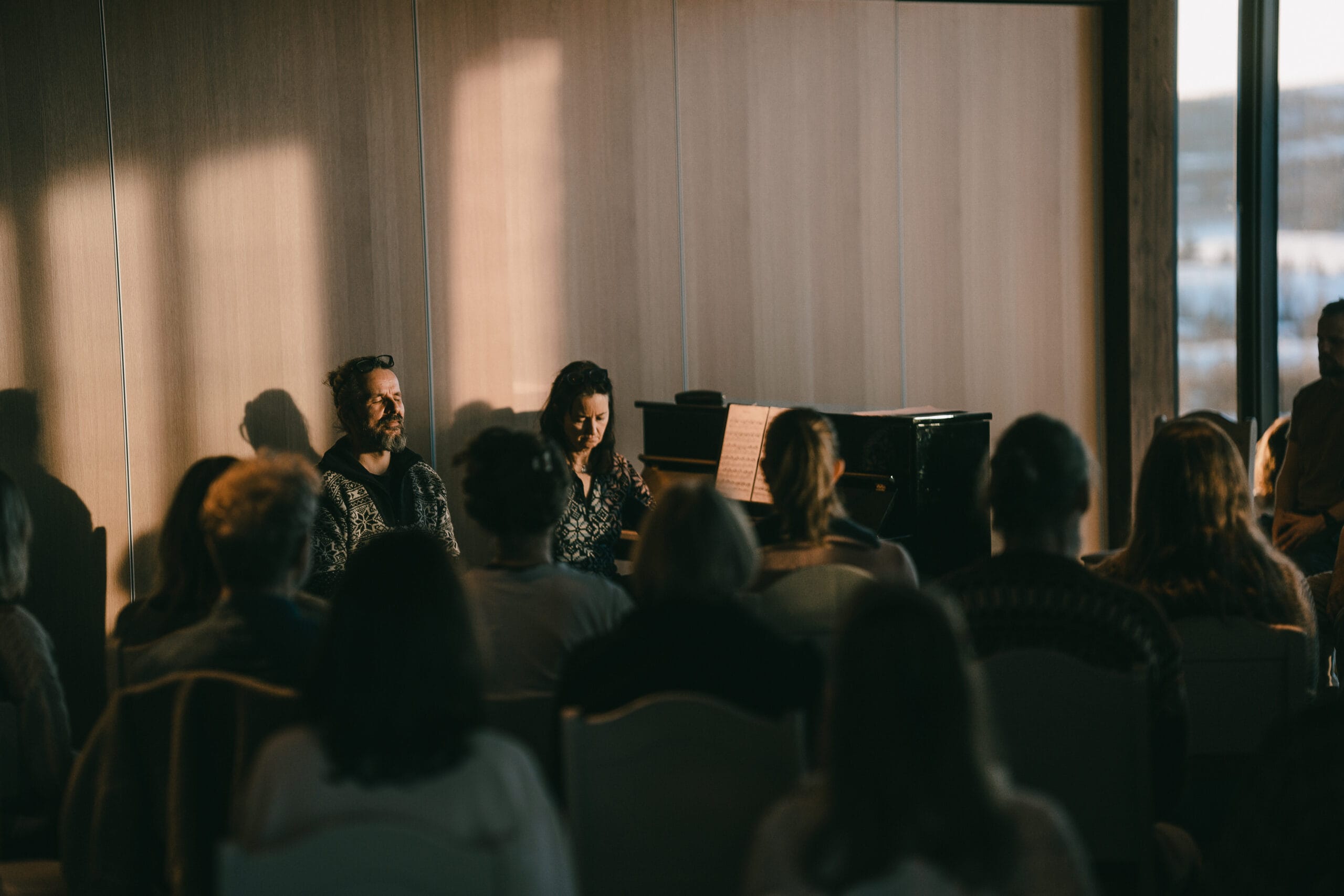
Piotr’s meditation has a Buddhist foundation and is called Metta, a practice that cultivates friendly and benevolent attention, first directed towards oneself, and then gradually towards others and the world as a whole. Through a simple, guided practice, he invites participants to develop a gentle and inclusive attitude towards their own body, breath and inner experience. The meditation then flows seamlessly into the same piece of music.
Afterwards, the beautiful, white-haired elderly lady described a completely different experience. The music was no longer tied to her past, but became a pure here-and-now experience. The piece emerged without history, without memories, without comparison—as if time had let go, and the music was allowed to be itself.
Our work has attracted the interest of RITMO (University of Oslo). In March, the public—with and without Parkinson’s disease—is invited to a very special event. A research concert measuring the audience’s physiological and mental responses. This will take place in Oslo and almost certainly in Bergen.
Leave a Reply to Når musikk blir til i kroppen – The Listening Body Cancel reply